Monday, November 26, 2007

What's wrong with the Chinese writing system?

Let's get back to the subject of history. We have already established that China has lost its dominance on the world stage for many reasons, including its unique geography, lack of serious competition and its relative influence in the region. As of mid-XV century, the stage for European domination has been set, and perhaps no further major explanation is necessary.

However, there is an additional factor, which I believe would have hindered China in many ways in the upcoming centuries, and that factor is its writing system:
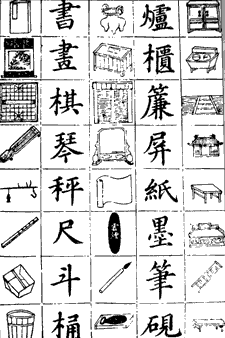

I believe that even if China did emerge as a dominant power in the XV century, alongside Europe, they would have still had trouble developing, in particular in the realm of science. I will speculate that the Scientific Revolution would have had a much more difficult time arising in East Asia. Why is that?

Compared to the Latin alphabet in Western Europe, the Chinese writing system is considerably more complex, which has disadvantages in at least the following areas:
  1. Memorizing hieroglyphs requires a lot more time and effort than memorizing a simple alphabet of 24-40 letters. This means it takes longer for children and illiterate people to learn, and makes high literacy rates more difficult.
  2. Hieroglyphic writing is by its nature resistant to loan words from other languages.
  3. Hieroglyphic writing takes slower to adopt new concepts into the writing system, because it requires an invention of a new character every time. This has the consequence that ideas from other languages will be adapted slower, as they have to go thru the artificial filter of the writing system.
  4. The Chinese hieroglyphs in particular have been excessively stylized to the point where they hardly resemble the objects they were supposed to represent, even in the simple case (illustrated by the picture at the beginning of the post).
  5. Hieroglyphic writing has further promoted elitism, has warped the concept of what it means to be educated, and has created a lot of waste in the educational system. Thus the focus was placed on learning the characters at the cost of the knowledge behind them.
  • Up until the XX century, much of the mentality around education in the East Asian countries has been along the lines of "I know more fancy characters than you, therefore I am more intelligent".
  • The emphasis has not only been on memorization of the characters themselves, but also the proper way to write them, including the direction and the thickness of each stroke!
  • In Korea, even though they invented a truly phonetic alphabet in the XV century, it was considered low-class for "weak" people who couldn't read the real writing (the original Chinese). It was called "women's script" or "children's script".
  • Similar things happened to the syllabaries of Katakana and Hiragana in Japan, which were not widely accepted by the elites, instead utilized by women, who did not have access to "proper" education.
  • There was a proliferation of obscure poetic paradigms, such as the Chengyu, the four-character idioms, which have a different meaning than what is directly implied by the characters they contain. While useful for poetry, and abstract expression, from the point of view of illustration of concrete concepts and hard sciences, this is just another digression.
A hierogphyphic system is a natural start and is well suited for early stages of a civilization's developments, where each character represents a concept. However as a society becomes more complex, new technologies get introduced and people begin to express more complex concepts, the hieroglyphic systems have a harder time keeping up with the expanding vocabulary (more about the evolution of writing in another post).

Europe's well-established alphabetical system allowed for quick transfer of ideas, and made introduction of new terms easy, which I believe is one of the main reasons the Scientific Revolution happened in Europe and not in Asia.

Saturday, November 24, 2007

Long time no post

Hey folks,
I dug up some older posts from 2004 and before. I think they fit in well on this blog. The topics are religion, capitalism, media, and a little bit of math. If you're feeling bored, browse around on the right side panel in the blog archive.

Thursday, November 8, 2007

Optmism and bubbles

I have been following market headlines for the last couple of months, and the picture looks grim. The bubble is bursting, ladies and gents, and we gotta brace for the worst.

So why do bubbles happen? Haven't we seen this before? There was the dot-com bubble in 2000, and the tech bubble followed. Then everyone started investing in the real estate market. The real estate has real value, the real estate is a real investment, the market won't burst, land prices always go up. Yeah, let's buy more real estate! Oh yeah, let's buy a house so huge I don't know what to do with it. Let's buy a house so huge I got no money left. Because hey - I can sell it 2 years later, and the bigger the house, the bigger the profit.

So let's dig a little deeper. It's one thing to think you can afford a house which is too big for your own good, and quite another to actually go ahead with the purchase and having the ability to pull it off. Here the average deluded consumer got the help from the institutions and people around him. Banks willingly lent him money for a purchase he couldn't afford. Friends told him his house prices would rise, and that theirs have already risen. Newspapers told him about the housing boom, and how it's such a hot investment these days, everybody's doing it, why don't you? Get on the bandwagon! Cash in on the craze!

The fundamental reason bubbles arise is people are too optimistic for their own good. They don't see or they don't wanna see failure, either of people around them or their own. They think things are always going to improve and when they hesitate, they're easily convinced by other people. In my experience, there are a lot more optimists in this world than there are pessimists. This happy-go-lucky attitude does wonders for a bubble, because everyone is affected.
  • The person who wants to buy a huge house realizes he can buy it now, even though he cannot afford it. He doesn't really know what he's doing, or if he can make it, but he's easily persuaded by his optimistic friends and the bank that's giving him the loan so easily despite his bad credit history. Everything is gonna be alright...
  • The bank employee / loan officer overlooks the buyer's credit history for the same exact reason. He is an optimistic too. He doesn't need to check too hard. If he hesitates, his colleague or his competitor is going to extend the sub-prime loan, and make a couple of thousand in commission on the sale. Why shouldn't it be him? Everything is gonna be alright...
  • The bank's CEO sees his loan officers making bad sub-prime loans but he won't stop them. It'll be fine. The other banks have made similar loans, and their stock price has gone up big time. Why should he miss out? Everything is gonna be alright...
  • Even the regulators turn a blind eye on the bad lending practices. The economy based on maxed-out credit cards and defaulted house loans keeps zooming on, the construction industry is driving the rest of the economy, unemployment is low, the dollar is high. What could go wrong? Mr. Greenspan is praised for his supervision of the superb invincible powerhouse of the American economy. His ego is on the line too, he's an optimist, everything's gonna be alright...
  • Once in a while a pessimist or a realist raises his head above the crowd and says something like "What are you guys doing? The real value of the house has nothing to do with what you're paying! The prices can't rise forever, etc."

  • But nobody wants to listen. "Why you gotta be such a downer, Mr. Pessimist! Can't you just be happy like the rest of us. You're always crying wolf!" And so the pessimists voices drown in the sea of happiness, as everyone appears to be getting richer at the same time, with no consequences. Solid judgement gets dismissed as doomsday predictions. Everything is gonna be alright...

Even as the bubble is bursting, the markets are refusing to believe it. They're still optimistic. It's only a few bad apples, it's only one bank, it's only some states, it's only the American economy, it's only the dollar that's tanking.

KAPANG - And then the bubble bursts...

Wednesday, October 17, 2007

Death to the white man

This man wants you dead.


Are you scared yet?

(click on the image to find out more)


Thursday, October 4, 2007

Wednesday, October 3, 2007

Questions for future investigation

Here are some historical questions that interest me:

- Why were Mesoamerican civilizations so focused on violence and human sacrifice, compared to any other ancient civilization?

- Why was the Maya civilization mostly populated in city-states, while the Aztecs had an empire?

- Why was the Aztec civilization focused so much MORE on warfare and human sacrifice than their Mayan counterparts?

- What causes certain people to resort to excessive violence, above and beyond what's necessary for survival?

Saturday, September 29, 2007

European Domination part III: Europe vs. East Asia

Finally, the hardest question to answer is perhaps: why not the East Asians? Now THIS is far from a trivial subject, since the civilizations of the Far East and those of Europe / Middle East developed at about the same pace, starting out with about the same time line for landmark inventions. Asia had a writing system, similar weapons, advanced ship-building technology, and gunpowder was invented in Asia centuries before it made its way to Europe. The Chinese explorer Zheng He traveled all over the Indian Ocean and sailed as far as Kenya in the XV century. It almost seems as though it was the natural progression of history for the Chinese to be the dominant power in the world. Then why didn't it happen?

_________________________
While the outcome of the "clash of civilization" between Europe and the Americas was predetermined well in advance, the outcome was not so certain in the case of East Asia. Here luck and historical timing played very important roles. The two civilizations had been developing almost independently until the XV century, with little or no conflict of interest, simply because of the sheer distance involved. The Chinese voyages under Zheng He happened in the years of 1405-1433, after which there were no more trips of such magnitude. Fortunately for the Europeans, they did not arrive at the height of Chinese power. By the time the first white voyagers (or you might call them pirates) entered the Indian Ocean in 1497 with ships of Vasco da Gama, the Chinese voyages in that direction had already stopped.

Had the Europeans paid their first visit to the Indian Ocean only 70 years earlier, they would have encountered a massive Chinese fleet of 317 ships, which they couldn't beat. The entry of Europeans into East Africa, Arabia and India may well have given the Chinese just the motivation they needed to keep their navy active and ward off the European invaders who were a clear threat. This could have easily changed the course of history, especially for places like South Africa, India, Australia, and Indonesia.

_________________________
This issue of timing begs the following question. Why did the Chinese scale back their fleet in the first place? The answer lies in the fact that all the way up to the arrival of Europeans, China had been too centralized and did not have enough competitors in the region. Japan, Korea and others in East Asia had always looked up to China. In the early XV century, China was the world's largest empire, with no significant rivals, and an army of 1 million troops. Under the command of Zheng He, the Chinese undertook a series of great voyages around the Indian Ocean, from East Africa to Arabia to Indonesia. The Chinese had a much larger fleet and better ships than even the Europeans.


While the Chinese voyages were grand in scale, they did not return a significant profit.
In some ways China was like a fat lazy cat, who didn't have to work hard to get what he wanted, while Europe was like a pack of skinny and hungry cats, out against each other, forced to be clever and opportunistic with the resources that they did have. European trips to every corner of the world were extremely focused on returning with the most valuable cargo, and beefing up the coffers of their respective empires. The Europeans had always been in competition with each other, and any country that decided not to send out expeditions would have been at a competitive disadvantage. After a while the European voyages started to pay for themselves.

_________________________
If we were to dig even deeper, we would have to turn once again to the brilliant Jared Diamond and his book Guns, Germs and Steel. In the last chapter he tackles the reasons for WHY China was so unified and Europe so divided. The answer seems to lie in regional geography. China seems to have few natural barriers and peninsulas, while Europe is inundated with those - the Alps, the British Isles, Scandinavia, Italy, the Iberian Peninsula, Peloponnesus.

Just take a look at the superimposed map for comparison:

Diamond argues, that the Europeans states have always been close enough to spread technology and innovation, but never really had the possibility to unify for long periods of time.

With Europe constantly divided, noone could get away with deciding to ban guns (like they did in Japan) or to ban shipping (like they did in China). Plus, any time an inventor wanted funding for a new technology, or a voyager wanted funding for a big trip, he had several heads of state to turn to. Christopher Columbus is a good example of that. Perpetual competition and division ensured very few inventions were left behind, and contributed to the rise of Europe as a whole.

_________________________
This just about covers the series of essays on European domination. Stay tuned for other posts, perhaps from entirely different areas.

Thursday, September 27, 2007

Papua gets connected


Just saw a pictorial on the BBC webpage about these people getting their first radio signal. Fascinating stuff in the year 2007.

Thursday, September 20, 2007

Apocalypto clip

While I'm too busy to post my own content ATM, here's an awesome clip from Mel Gibson's Apocalypto, in a colorful portrayal of the Maya civilization.

Warning: extreme graphic violence.

Tuesday, September 11, 2007

Guns, Germs and Steel:Old World vs. New World

First of fall, let's see how this book relates to my earlier post. The question I asked there was "Why did the Europeans take over the American continent, and not vice versa?".

Chapter 3 of Guns, Germs, and Steel, entitled "Collision at Cajamarca", contains the most fascinating first-hand account of the encounter between the Spaniards and the Incas, written by the Spaniards themselves. It describes how 168 armed Spaniards with no reinforcements were able to overtake an army of 80,000 of Incas and capture their leader. In and of itself, this historical event is of utmost significance, and I cannot believe how few mainstream history books actually contain the account of this encounter between conquistador Francisco Pizarro and the Inca emperor Atahuallpa. After this story, Diamond asks the most natural questions about the incident.
  • How was it possible for the Spaniards to win such an uneven battle?
  • Why were the Incas so naive as to be thrown off by the small band of isolated foreigners, (however armed they were)?
  • Why did the Europeans have such an enormous advantage in this and many consequent encounters in the Americas?
  • What historical factors made the difference between the civilizations so staggering?
Like I argued before, and Diamond confirms, the Native American civilizations were late to develop farming, cities, and writing systems. However, he digs deeper into the reasons. Here's some of the main ones:
  • Slow domestication of plants:
    • The domestication of plants in the Americas happened slower, because the plant cultures on the continent (corn and potatoes) were more difficult to domesticate, and provided less protein than the Eurasian counterparts of wheat and barley. The birthplace of agriculture, the Fertile Crescent of in Southwestern Asia was blessed with a package of domesticable plants that could be adopted and shared quickly between the peoples within the small region, and then spread further east and west.
  • Slow domestication of animals:
    • When the American continents were settled, human hunters exterminated all or almost all of the large mammals suitable for domestication. Such extermination of large mammals did not occur on the Eurasian continent because the wild animals co-evolved alongside humans, adapting sufficiently to the highly skilled hunters so as not to be completely wiped out. Thousands of years down the line, when those animals would have come in handy for domestication, they were not available in the Americas (e.g. the Aztecs had only turkey and dogs), while the Eurasians still had access to cows, goats, pigs and chickens and, later on, horses.
  • Slow development of immunity to germs:
    • The Eurasians' domesticated cattle was a mixed blessing. On the one hand, the animals provided protein, shelter, clothing, fertilizer, etc. On the other hand, they were also a constant supply of new germs. The Americans had fewer deadly germs, partly because they had fewer domesticated animals. By the time the Europeans invaded the Americas, they brought with them a plethora of disease to which the American populations had no immunity.
  • Orientation of the continents:
    • Jared Diamond notices that the general orientation of the continental axes is east-west for Eurasia, and north-south for America. This seems to have paramount significance in the spread of agriculture. Similar latitudes have similar climates, and allow for adaptation of similar crops, while a north-south transfer of agriculture is much more difficult. Agriculture spread very rapidly in Eurasia from the Fertile Crescent to most of Europe, North Africa and India. However the Inca and the Maya/Aztecs had no contact with each other, isolated by a buffer of areas unsuitable for agriculture, unable to transfer domesticated crops, animals, germs, writing systems or useful technological inventions.
I believe these reasons provide the key answers on the issue of European dominance over the Americas. Jared Diamond's analysis is thorough, and his facts are well-researched, thus on this question I have nothing more to add.

Sunday, September 9, 2007

Guns, Germs and Steel

Well, well, well. I was in the process of writing another post on the reason for European domination of the global resources. This one was going to be on why it wasn't the Chinese or other East Asians who "had the cake and ate it too". But I had a hard time coming up with very solid reasons, because it seems like it was a very close race (meaning "competition" in this case).

In the meantime, a friend of mine suggested a book called "Guns, Germs, and Steel" by Jared Diamond. He said it's a must-read, and that I'd love it, and indeed I did. I am now half way into it, and I have to admit, that hands-down this is the best book on history I have ever read, in fact I believe it should be required reading in all high schools, as it is very much fundamental knowledge about history. It is absolutely brilliant, with in-depth analysis of every question that I have asked in the earlier posts, and some that I have had in the back of my head. Basically, the questions this book attempts to answer are:
  • Why does the world look the way it does today?
  • What are the underlying historical forces that set the human populations in motion?
  • Why did some civilizations advance quicker than others?
  • What are some fundamental civilization stepping stones, and how did they come about?
Every question Diamond asks, he digs deep to the root causes, leaving no stone unturned. So I'm going to spend some time on answering and re-answering the same questions I asked earlier, now with the knowledge from this phenomenal book.

Monday, August 13, 2007

European domination part II

Let’s start with what most people know about the conquest of America. The typical story told in the history books, is that the Europeans came and encountered the Native Americans in a “clash of civilizations”. The story goes on to claim that the fight was unfair because: the Native Americans respected mother earth, and were in harmony with nature, while the Europeans were cruel, racist, inhumane bastards, who were only out to enrich themselves, and subjugate or erradicate the indigenous populations. According to popular perceptions, the other reasons the Europeans took over were disease, and guns. The traditional textbooks would lead us to believe that if it wasn’t for smallpox, gunpowder and dishonesty, the Europeans would have had a difficult time conquering the continent.

Yes, disease and guns sped up the process of conquest. Yes, clever political maneuvering and some unnecessary cruelty may have been in place. However, what most people don’t realize is none of that was fundamental in determining the outcome of the encounter between the European invaders in the 1500s and their Native American contemporaries. Most people are aware that Europeans had a technological edge, but what they fail to realize is just HOW far behind the Americas were relative to the invaders.

So let’s start with North America first. Let's face it, in the XV-XVI centuries the greatest civilizations of North America were absolutely laughable in comparison to the invading powers. None of them had a writing system, and their greatest architectural achievements were large burial mounds. As my Chinese friend once remarked after visiting the Serpent Burial Mounds of Ohio "You call this a civilization?" With all due respect for their culture and harmonious living alongside with nature, these people weren't ready for their 15 minutes of fame on the world stage (let alone 5 centuries).

Then what about the Aztecs, the Maya or the Inca? Indeed against the backdrop of North American "civilizations", these could actually be called civilizations. They had a writing system, mathematics, astronomy, and stable systems of government, with the ability to control relatively large territories and resources. From what I know about the Maya and the Aztecs, they can be classified as "ancient civilizations", comparable to ancient Egyptians and the civilizations of Mesopotamia. They had no wheeled vehicles, no beasts of burden, and no iron weapons, using sophisticated "flint knives, stone axes, and very sharp cutting blades made from the volcanic rock obsidian". (LHAM, p.24). The Inca had domesticated the llama, and had a relatively impressive system of roads, but still had only stone weapons, no wheel, and instead of a writing system they only had a complex system of record-keeping called Quipu (source1) .
Thus, from the point of view of technology the American civilizations were at least 1000-2000 years behind the conquistadors. It's almost comparable to the Europeans trying to go back in time from the year 1500 to conquer the Roman empire at its height. Thus in the long run, the American civilizations were doomed when faced with the European invaders. Clearly, despite the overwhelming home-turf advantage despite the fact that the Aztec and Inca empires were at their height, it took only 50-100 years until the Spaniards were in control of most major cities (source2). To put things in perspective, that's only 1-2 generations to take over the most advanced civilizations present on the continent!

Now let's dig even deeper. Why were the American Civilizations so far behind in their development? I believe the answer lies in the fact that the American continents were settled considerably later than the Old World. The first humans only set foot on the American continent about 11000 B.C., and it took a while before they came across a set of climatic conditions that would force them to abandon their hunter-gatherer ways, develop agriculture, and complex societies. In the meantime, the Old World civilizations were already beginning to pop up. Here's a comparison chart for some of the important milestones in civilization development.


Old World

New World

Domestication of plants

Middle East: 10000-8000 B.C.,

China: 10000 B.C.

Mesoamerica: 7000-5000 B.C.(LHAM, p.24)

First cities

Sumer (e.g. city of Ur) 2600 B.C.

Olmec (San Lorenzo): 1200 B.C. (LHAM, p.21)

First pyramids

Egypt 2700-2600 B.C.

Maya: 150 A.D (LHAM, p.21)

Writing system

Sumer 3500 B.C.

Maya: 200 A.D., Inca: never (only Quipu)

Invention of the wheel

Sumer 5000 B.C.

Never invented!!


As you can see, the foundations for the demise of the American civilizations in the hands of an Old World power had been laid long before the European conquests began. It wasn't the guns, nor was it the disease that brought the Americas down. It wasn't the weakness of the Aztec or Inca rulers, it wasn't the treachery of the Spanish conquistadors. It wasn't the cruelty of Andrew Jackson and Trail of Tears, regrettable as that event might be. It wasn't the naivette of the simple inhabitants of Manhattan, who sold it to the English for $24 (although that does foreshadow just how easy the conquest would have been). The grand battle of civilizations was decided thousands of years before that, it was just a matter of time before the Americas fell.

References:

LHAM: "The Lost History of the Aztec and the Maya", author: Charles Phillips with consultant Dr. David M. Jones
Wikipedia (see specific links)

P.S. I use Wikipedia mostly to confirm the knowledge from other, sources, such as textbooks on history and anthropology. I no longer have access to some of those textbooks, so I cannot site them here.

European domination

A few years ago, my Korean roommate and I had a solid discussion about the following topic: Why did the European civilization emerge as the dominant power in the world between 1492-1970? I found this discussion very enlightening and I'm going to shed some light on the subject.

First of all, let's drop all the nonsense about political correctness, because it is impossible to go into this discussion without offending somebody. I can just hear somebody whining: "Oh, but every culture is unique in its own way, and how can you say Europeans are better than others, wah wah wah, you're such a racist pig!"

While I concede that every culture and race is unique in its contribution to the world, with unique history, customs, technological developments, etc., it is also undeniable that Europeans and their descendants have slowly but surely emerged as a dominant power in the world in many aspects: military, economic, cultural, and technological. They have all but completely obliterated aboriginal civilizations in North America and Australia, established firm power structures controlling South America, with a European ruling class, enslaved the people of and used natural resources of Africa & Carribean, and established trading posts, and slowly creeped in with strong economic influence in South & East Asia.

But it all could have happened differently, according to one of the following fictional scenarios.

  • The Africans conquer the world, starting with Christopher Culumba of the South African empire, taking a great historical voyage to Brazil in 1492. First he takes over the Inca empire, then they expand east conquering India, and after amassing wealth and weapons, they take on the useless Europeans in an unfair fight, enslaving the whole European continent.

  • The Aztecs are way ahead of the game in their maritime technology and set off to conquer Europe. Inadvertently, they obliterate half of Europe's population by syphilis and nicotine, and the other half by brute force. At the same time, the rival civilization of Inca spread their empire to Africa, and go on to India. In the meantime the Aztecs travel northwest across the Pacific and enslave the good-for-nothing barbarian East Asian populations.

  • The Japanese empire expands quickly and emperor Katsuhito sends off Karistoforo Karumbo on his voyage east on his great historical voyage, to conquer California in 1492. He discovers California is inhabited by complete savages with no technology whatsoever (historically true), and they're literally sitting on a goldmine. He tells the emperor of Japan of the enormous riches in the new continent, and the emperor sends more expeditions. Later on Japan enslaves the barbarian Aztecs, thus amassing great wealth. Koreans embark on a journey to Australia and Africa and claim those territories. To compete with the Japanese and the Koreans, the Chinese use their superiority on land to subjugate India, and the Arab World, after which they take on the Europeans. By the time the Chinese arrive to Europe by land, they realize Japanese have already made it around the world, and established trading posts with Spain, Portugal and England. England, being a protectionist and racist island, agrees to only deal with the Japanese, until they realize they cannot keep up the isolation, and open up to learn from the wise Easterners and adapt their superior technologies. In the year 2000, Japanese is the main language of international communication, and the second language for almost a quarter of the earth's population, followed closely by Chinese and Korean, which are mainly spoken in their former colonies.

So none of the above scenarios actually happened, and we have to ask why? Why did the other civilizations of the world not emerge as dominant? The answer is in the next post.

Thursday, March 1, 2007

Youbetards rant

So I've been using Youtube for a while, and I find that for the most part, it's really retarded. What's most retarded about it is a complete and utter lack of interesting original Youtube content. I mean Youtube is great when it comes to checking out snippets from The Daily Show, Bill Maher, Seinfeld episodes, and other material intended for TV. Those snippets are produced professionally in a real studio, and are well polished in both content and delivery.

Then there's the angry Zionist conspiracy-theorists, and even angry left-wingers commenting in between the original content from the TV shows. They think they're actually adding something to the TV clip by their retarded comments. But in fact, they're only showcasing their own stupidity, producing unnecessary interruptions to the nice flow of the original content, and giving us a chance to once again appreciate the good quality of the clip made for TV.

Which brings me to the important question: WHERE THE FUCK IS THE ORIGINAL CONTENT?? Can somebody produce a nice clip with something new / funny / inspiring in it? I mean Youtube is supposedly the place where creative minds are liberated, and "regular Joes" get a chance to shine. So what do you get when the opportunity to shine is unleashed on the general populace?

Well, there's one guy complaing about how there's not enough black people on Youtube, there's another one making fun of him for it, and the third is the only black guy on Youtube responding to the only white guy who cared. There's a video of a guy on Youtube teaching people how to make a good video on Youtube. Oh I got an idea! How about first you make ONE decent video worth watching, and then teach others how to do it, Mr. Youtuber.

Then there's some uninteresting clips of random shit, like teenagers head-banging to System of a Down or some 16-year old chick listening to her Ipod and eating a pizza. WTF?? People get a life!

Unforunately, I have to come to the sad conclusion that Youtube's own content is largely a bunch of self-congratulation, mutual masturbation, second-rate commentary on original content, that was worthless in the first place

Peace & Love

P.S. For bashing of the blogosphere, check out this Maddox rant